Cuboid Calculator: measurements and units
Calculate a rectangular box’s volume, closed surface area and space diagonal from length, width and height. Enter three perpendicular dimensions in the same unit. Surface area includes all six faces.
Enter your measurements
Enter Length, Width and Perpendicular height for the rectangular box, then choose Calculate. The example button replaces these inputs with the case below. Use a decimal point or exponent notation such as 1e3, without unit suffixes or thousands separators.
Each dimension must be positive, from 0.000000001 to 1,000,000,000. Dimensions in metres produce cubic metres of volume, square metres of surface area and metres of diagonal length. Convert all three dimensions to the same unit first. No automatic unit conversion is performed.
Worked example
Length 2, width 3 and height 4 give volume 24 cubic units, surface area 52 square units, and space diagonal approximately 5.38516480713 length units.
Formula and interpretation
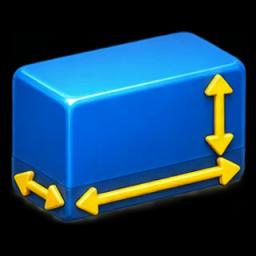
Volume = lwh. Closed surface area = 2(lw + lh + wh). The space diagonal joins opposite corners through the box and equals √(l² + w² + h²).
Limits and common mistakes
This is an ideal rectangular cuboid. It does not subtract wall thickness, account for rounded corners or estimate usable packing capacity. An open-top box needs one face subtracted from the reported closed surface area.
Answers use 12 significant digits of floating-point precision; this does not improve measurement accuracy. Copy results copies the displayed measurements. Recalculate after edits.
For a related calculation, open Circle Calculator.